
What Is Operational Due Diligence A Guide for Dealmakers
Understand what is operational due diligence and its impact on M&A. This guide covers the process, red flags, and key frameworks for investors.
Think of buying a classic car. You'd never make an offer based on shiny paint and a clean title alone. You'd hire a specialist to get under the hood, check the engine, test the transmission, and see if the frame has any hidden rust. That’s exactly what operational due diligence (ODD) is for a business.
It’s the deep-dive investigation into a company's inner workings—its people, processes, and technology—to see if the business can actually perform as advertised.
What Is Operational Due Diligence Really About?

While financial due diligence confirms the price is right and legal diligence ensures the paperwork is clean, ODD answers a far more practical question: “Can this business actually deliver on its promises?”
This intensive review became standard practice for a reason. Born out of the private equity boom of the late 1990s and early 2000s, ODD gained traction after a string of high-profile M&A deals went south. Studies from that era found that a failure to properly vet operations was a factor in a staggering 62% of deals that ended up destroying value.
Today, its importance is undisputed. Roughly 85% of private equity firms won't close a deal without a thorough ODD process, cementing it as a non-negotiable step in modern dealmaking.
Uncovering Hidden Risks and Opportunities
The main job of operational due diligence is to pressure-test the investment thesis against the reality on the ground. It’s about finding the hidden operational skeletons—and the untapped potential—that never show up on a spreadsheet.
This process zeroes in on a few critical questions:
- Can It Scale? Will the current operational model support the aggressive growth plans?
- Where Are the Bottlenecks? Are there glaring inefficiencies in the supply chain, production, or customer service?
- Is the Tech a Help or a Hindrance? Are the IT systems and infrastructure an asset or a ticking time bomb of technical debt?
- Who’s Driving the Bus? Does the company have the right people and leadership structure to execute the post-deal strategy?
Getting clear answers here helps investors dodge major headaches after the deal closes. For a closer look at what peak performance looks like, our guide on what is operational efficiency is a great resource.
At its core, ODD is the bridge between a company's financial story and its operational reality. It uncovers whether the engine can truly win the race or if it's destined for a breakdown on the first lap.
To really grasp its importance, it helps to see how ODD fits alongside the other types of diligence. Each one provides a unique piece of the puzzle, and you need all of them to see the full picture before signing on the dotted line.
The Four Pillars of Due Diligence
| Diligence Type | Primary Question Answered | Key Areas of Focus | Typical Output |
|---|---|---|---|
| Financial | "Are the numbers accurate and sustainable?" | Historical financials, quality of earnings (QoE), cash flow analysis, working capital, debt. | QoE report, financial model adjustments, validation of financial statements. |
| Legal | "Are there any legal liabilities or compliance issues?" | Contracts, litigation history, intellectual property, corporate structure, regulatory compliance. | Legal risk summary, disclosure schedules, identification of required consents. |
| Commercial | "Is this a good market and a strong business?" | Market size and growth, competitive landscape, customer analysis, product-market fit, pricing strategy. | Market study, competitive analysis report, validation of revenue projections. |
| Operational | "Can the business deliver on its promises efficiently?" | People, processes, technology, supply chain, scalability, capital expenditure needs, IT infrastructure. | ODD report with risk assessment, synergy identification, and a 100-day improvement plan. |
Looking at them side-by-side, it's clear that without operational due diligence, investors are essentially flying blind. You might have a legally sound company with great financials in a hot market, but if its core operations are a mess, the investment is built on a shaky foundation.
Why ODD Is a Non-Negotiable Part of Modern Deals
If financial due diligence is about checking the price tag and legal diligence confirms the title is clean, then operational due diligence (ODD) is about looking under the hood to see if the engine can actually win the race. It’s the part of the deal process that moves beyond the spreadsheets and asks the most important question of all: Can this business actually deliver in the real world?
Without this deep-dive, any investment thesis is just a house of cards built on assumptions. ODD is what stress-tests those assumptions against the messy, day-to-day reality of how a company truly runs. It's the crucial difference between buying a business that just looks good on paper and one that's truly built to perform.
Connecting Operations to Financial Outcomes
Every single operational detail, big or small, eventually hits the bottom line. That disorganized warehouse isn't just a logistical mess; it's a direct driver of higher labor costs, slower delivery times, and angry customers. An outdated IT system isn't just a tech headache; it's a bottleneck for growth that will demand millions in unplanned capital spending down the road.
Operational due diligence is the art of translating these on-the-ground realities into hard financial numbers. It’s all about putting a dollar value on risks and opportunities to give investors the full picture of a deal's true potential. This is especially true in high-growth scenarios like venture capital, where a company's ability to scale its operations is everything. For more on that, our guide on venture capital due diligence offers a much deeper look.
Ultimately, ODD is designed to hit four key objectives that protect an investment and set the stage for success.
- Validate the Investment Thesis: Does the company actually have the operational muscle to deliver on the growth projections everyone is so excited about?
- Identify Operational Red Flags: This is about uncovering the hidden weaknesses—like a single-source supply chain or unscalable tech—before they turn into post-deal nightmares.
- Quantify Synergies and Savings: Find specific, actionable ways to cut costs, boost efficiency, and improve performance. This isn't theoretical; it's about finding real money.
- Build a Post-Acquisition Blueprint: Create a clear, data-backed 100-day plan to start creating value from the moment the deal closes.
The High Cost of Skipping the Inspection
Forgoing ODD is like buying a house without getting an inspection. It's a massive gamble that almost never pays off.
Picture a private equity firm buying a manufacturing company with fantastic financials. After the deal closes, they discover the factory's core machinery is on its last legs, requiring a massive, unplanned investment that completely erodes their expected returns. This isn’t just a bad dream; it happens all the time.
The data paints a very clear picture of just how costly this oversight can be.
A landmark McKinsey analysis of 800 M&A deals found that companies that skipped ODD faced 28% higher integration costs and 35% lower synergy realization. In stark contrast, those that did a proper operational review saw EBITDA uplifts of 15-20% in just 18 months.
Further research from KPMG shows how ODD actively de-risks transactions. Their work revealed that detailed operational reviews identified major risks in 68% of target companies, like excess inventory driving costs 22% above industry norms. Armed with that kind of specific, hard data, buyers were able to renegotiate purchase prices by 10-15% on average. You can see more of these operational due diligence findings on kpmg.com.
In the end, operational due diligence isn't a simple box-checking exercise. It’s a strategic necessity that separates the successful investments from the cautionary tales. It delivers the critical intelligence needed to de-risk a deal, negotiate from a position of strength, and lay the foundation for creating real, lasting value.
Mapping the Operational Due Diligence Process
An operational due diligence project is far from a chaotic scramble for information. It's a structured, phased investigation, methodically peeling back the layers of a company to see what’s really going on under the hood.
Think of it as a four-act play. Each act builds on the last, revealing the full story of a company’s operational health and giving investors a clear roadmap to follow.
The investigation almost always unfolds across four distinct stages:
-
Scoping and Data Requests: This is where the groundwork is laid. The ODD team huddles with the investment team to hammer out the key questions and make sure everyone is aligned on the investment thesis. A comprehensive data request list is then fired off to the target, asking for everything from org charts and process maps to production metrics and IT system diagrams.
-
In-Depth Analysis and Site Visits: Once the virtual data room opens, the real detective work begins. Analysts pour over documents, hunting for trends, anomalies, and red flags. This desk work is almost always paired with "boots on the ground" site visits to warehouses, factories, or call centers. You have to see the operation in person to truly understand it.
-
Management Interviews: Here, the data starts to talk. The ODD team conducts a series of structured interviews with key members of the target’s management and operational leadership. The goal is simple: validate the findings from the data and get the nuanced story that numbers alone can never tell.
-
Final Reporting: The project culminates in a detailed report, but this is no mere data dump. It’s a synthesized analysis that clearly outlines the key risks, quantifies potential cost savings or growth opportunities, and provides a clear, actionable recommendation.
This systematic process ensures every critical facet of the business is thoroughly examined. No stone is left unturned.
The Core Pillars of Investigation
During the analysis phase, the deep dive is typically organized around the core components that form the operational backbone of any company. This is where the real work happens, and it’s a framework that allows you to systematically dissect a business.
The goal isn't just to find problems. It's about validating the investment thesis, identifying hidden risks, and building a concrete plan for value creation post-close.
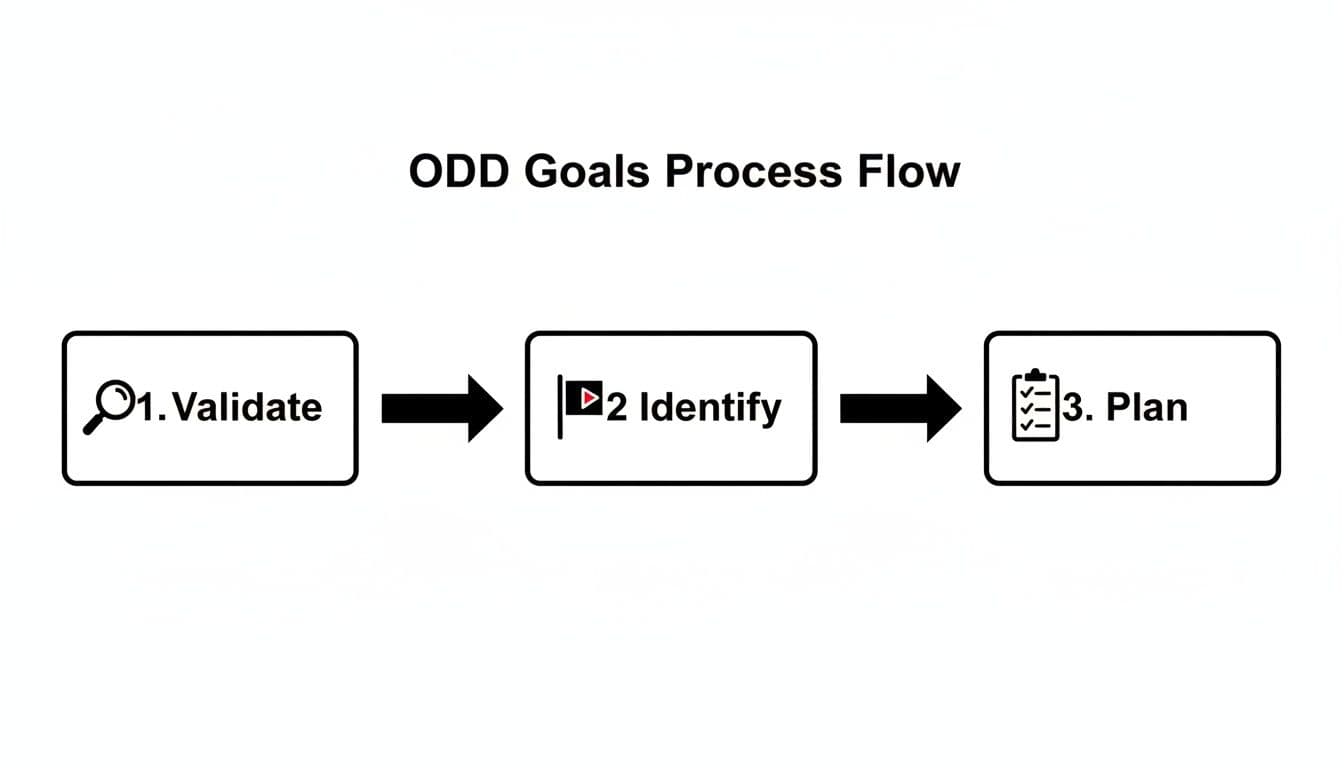
As you can see, ODD is forward-looking. It connects the "as-is" state of the company to the "to-be" vision. To get there, the investigation drills down into several key areas.
The table below outlines the primary areas examined during ODD and the kinds of tough questions investigators are trying to answer.
Core Components of an ODD Investigation
| Operational Pillar | Key Focus Areas | Critical Questions to Answer |
|---|---|---|
| People & Organization | Leadership, org structure, turnover, talent gaps, culture | Do they have the right team to execute the growth plan? Is the organization built for scale or stuck in the past? |
| Core Processes | Manufacturing, sales operations, customer support, supply chain | Where are the bottlenecks? Are key workflows like the procure to pay process efficient and well-documented? |
| Technology & IT | Core systems (ERP, CRM), scalability, cybersecurity, infrastructure | Is the tech stack an asset or a liability? Are they one security breach away from disaster? |
| Supply Chain & Procurement | Supplier concentration, logistics, inventory management, resilience | Is there a critical dependency on a single supplier? How would the business handle a major supply chain disruption? |
By dissecting a company across these pillars, an ODD team can build a comprehensive, 360-degree view of its operational strengths and, more importantly, its weaknesses.
From Analysis to Actionable Insights
Ultimately, mapping the process is only half the battle.
The real value of operational due diligence comes from translating the findings into actionable, strategic recommendations. A finding like “high employee turnover” is useless on its own. The final report must quantify the financial impact of that turnover—the recruitment costs, the lost productivity, the strain on morale.
This rigorous, structured approach ensures that when the final report lands on the investment committee’s desk, they have a clear, evidence-based understanding of the operational reality they are about to inherit.
Often, this work uncovers issues that demand an even deeper look. Learning how to perform root cause analysis is a critical skill for digging into the why behind the problems ODD uncovers. This is how abstract financial models are transformed into a tangible, operational game plan.
Identifying Key Red Flags and How to Address Them
Think of an operational due diligence review as a hunt for clues. You're searching for those subtle signs of trouble that, if left unchecked, could completely derail a multi-million dollar investment. These "red flags" are the critical findings that separate a great deal from a disastrous one, and they're often hiding in plain sight within a company's day-to-day work.
Spotting these issues is just the first step. Knowing how to fix them is where the real value is created. ODD isn’t about just pointing out problems; it’s about crafting a clear, actionable plan to address them. This problem-solution mindset is the heart of effective dealmaking and directly mirrors the "issue-to-recommendation" flow you see in a consulting case interview.
Common Operational Red Flags and Mitigations
Operational weaknesses can show up anywhere, from a fragile supply chain to hopelessly outdated technology. Here are some of the most common red flags we see during an ODD investigation and, more importantly, practical strategies to manage the risks.
1. Over-Reliance on a Single Supplier
When a company sources 80% or more of a critical component from one supplier, they're sitting on a ticking time bomb. A fire at that supplier’s factory, a geopolitical flare-up, or even a simple contract dispute could halt production overnight.
- The Risk: Severe business interruption and a sudden drop in revenue.
- The Mitigation Strategy: You have to be proactive. An investor might make the deal contingent on the target company qualifying a second-source supplier within the first 100 days. Another approach is to quantify the risk and use it to negotiate a lower purchase price, earmarking that discount to fund a supplier diversification program post-close.
2. High Turnover in Critical Roles
If a business is constantly losing key managers, engineers, or top salespeople, that’s a symptom of a deeper problem. It might signal a toxic culture, uncompetitive compensation, or a lack of career growth—all of which threaten stability and long-term performance.
- The Risk: Loss of institutional knowledge, inconsistent execution, and skyrocketing recruitment costs.
- The Mitigation Strategy: Part of a good ODD process is digging into human capital vulnerabilities. For example, understanding common HR compliance red flags can help you pinpoint the root causes of turnover. The fix often involves creating a post-close retention plan with performance-based bonuses for key staff or launching a thorough compensation study to fix pay gaps immediately.
Deeper Dives into Systems and Processes
Beyond single points of failure, ODD often uncovers systemic issues baked into a company's very core. These are more complex to solve, but they also hold the greatest potential for creating value.
The 2008 financial crisis really put ODD on the map, as investors learned the hard way about the immense danger of hidden operational frailties. In the years that followed, better regulations and more thorough vetting led to a 60% drop in fraud-related blow-ups among registered funds by 2015—a testament to the power of a solid operational review.
3. Unscalable Legacy IT Systems
A company running on a custom-built, 20-year-old ERP system is carrying a massive amount of technical debt. This kind of system can't support modern analytics, integrate with new tools, or handle a sudden surge in business. It effectively puts a ceiling on the company's growth potential.
- The Risk: Inability to scale, sky-high maintenance costs, and major cybersecurity vulnerabilities.
- The Mitigation Strategy: The ODD report needs to quantify the cost and timeline for a full system migration. That number—which could easily be in the millions—becomes a powerful negotiating tool. The investment thesis must then include a detailed IT roadmap and budget for modernization from day one.
4. Lack of Documented Procedures
When processes only exist in the heads of a few key employees, the business is incredibly fragile. What happens when those people leave? Without standard operating procedures (SOPs), you get inconsistent quality, inefficient training, and an inability to scale.
- The Risk: Inconsistent service delivery, operational chaos, and a total loss of institutional know-how.
- The Mitigation Strategy: A good 100-day plan would prioritize a "process documentation blitz." This means sending in a team to work side-by-side with frontline staff to map and standardize critical workflows. That initial investment pays for itself many times over by creating a stable foundation for training and continuous improvement. This is especially vital in investment management, where even minor back-office slip-ups can have major consequences. In fact, some analyses show that 15-20% of strategies were vulnerable to performance decay from operational weaknesses like poor data management. Read more about how ODD helps in investment management on getaura.ai.
How to Master ODD for Your Next Case Interview
If you're gunning for a spot in consulting or private equity, getting your head around operational due diligence is non-negotiable. This isn't just theory; it's a core skill that interviewers at top firms use to separate the contenders from the pretenders. They’ll throw an ODD-style case at you to see if you can think like a real deal advisor—someone who can look past the glossy financial models and get their hands dirty with the messy reality of how a business actually runs.
Think of these cases as a pressure cooker simulation of a live ODD project. You get a handful of information, a ticking clock, and you're expected to pinpoint the most critical operational risks and opportunities. Success hinges on your ability to quickly structure the problem, ask razor-sharp questions, and, most importantly, connect what's happening on the factory floor or in the warehouse directly to the bottom line.
Deconstructing the ODD Case Prompt
So, what does an ODD case prompt actually look like? It often starts with a scenario like this:
"Our client, a PE firm, is looking at buying a direct-to-consumer (DTC) apparel brand. Revenue growth looks incredible. What are the key operational areas you would dig into to see if this deal makes sense, and what are the biggest red flags you’d be watching out for?"
When you hear this, it's your signal to switch into ODD mode. The interviewer doesn’t want a generic Porter's Five Forces or SWOT analysis. They're testing your gut for operational issues and your ability to map out a smart, prioritized investigation plan.
A Structured Approach to Answering
The worst thing you can do is start rattling off random ideas. The best candidates immediately bring structure to the chaos. This shows you can handle ambiguity and create a logical path forward. A solid approach breaks down into three phases: Scoping, Investigating, and Synthesizing.
Step 1: Scope the Problem
Before you do anything else, you need to understand the big picture. Clarify the scope of the problem and get to the heart of the client's investment thesis. This isn’t about stalling; it’s about making sure you're solving the right problem.
Don't be shy about asking a few smart clarifying questions upfront.
- "Can you tell me more about the investment thesis here? Is the plan to keep growing in existing markets, or is the client betting on international expansion?"
- "What's been fueling this recent growth? Are we talking about one or two 'hero' products, or is it spread across the entire line?"
- "Does the client own other apparel companies? I'm wondering if there are any potential synergies they're hoping to unlock."
These questions immediately narrow the field and prove you’re thinking about the "so what?"—the strategic rationale behind the deal—from the very start.
Step 2: Build Your Investigative Framework
With the scope defined, it's time to lay out your plan of attack. You need a framework that outlines the key operational pillars you'd investigate. A fantastic way to do this is to simply walk through the company's value chain.
For our DTC apparel brand, your framework could look something like this:
- Supply Chain & Manufacturing: Where does the stuff come from? You'd want to dig into supplier concentration, quality control, and production lead times. A huge red flag would be finding out they get 90% of their product from a single factory in one country.
- Warehousing & Fulfillment: How do they get products to the customer? Here, you’re analyzing their inventory systems, warehouse capacity, and the performance of their 3PL partner. Fast-growing brands often outgrow their fulfillment capabilities, leading to costly shipping errors and angry customers.
- Technology & E-commerce Platform: Is the tech stack built to last or is it held together with duct tape? You need to assess the website's stability, whether the e-commerce platform (like Shopify Plus) can handle more volume, and how they secure customer data.
- Customer Service & Returns: What happens after the purchase? Look at call center wait times, how efficiently they process returns, and the actual cost of those returns. For an apparel brand, a high return rate can absolutely gut profitability.
- People & Organization: Do they have the team to take this business to the next level? You’d want to assess the experience of the management team, check for high turnover among key people, and see if critical processes are written down or just "tribal knowledge" living in one person's head.
Presenting a clear, MECE (Mutually Exclusive, Collectively Exhaustive) framework like this is a tell-tale sign of a top-tier candidate.
Step 3: Synthesize Findings into a Recommendation
This is the moment of truth. You have to pull it all together and connect your operational findings back to the money. Your final recommendation shouldn't be a vague summary; it needs to be a sharp, data-driven conclusion for the PE client.
For instance, you might wrap it up like this:
"Based on this initial diligence, I would advise the client to proceed, but with significant caution. The brand's top-line growth is compelling, but I've identified two major operational risks. First, their 90% reliance on a single supplier is a ticking time bomb for business continuity. Second, their primary warehouse is already at 95% capacity, which means it physically cannot support next year's growth targets without a large, unbudgeted investment in a new facility. My recommendation would be to quantify the cost of mitigating these risks and use that figure to renegotiate the purchase price down by 10-15%."
A specific, quantified recommendation like this demonstrates that you can translate operational analysis into actionable investment advice—which is the entire point of what operational due diligence is. Nailing this structured approach will make you stand out in interviews and, more importantly, prepare you for a successful career. For hands-on practice, you can use an AI-powered tool like Soreno to run through these exact types of ODD case drills until the framework becomes second nature.
The Anatomy of a Powerful ODD Report
When an operational due diligence project wraps up, the final deliverable isn't just a thick binder of data and charts. It’s a strategic roadmap that will guide a multi-million dollar investment. A truly powerful ODD report cuts through the noise, translating complex operational findings into a clear, actionable story for investors. If you can understand how these reports are built, you’ll have a huge advantage in framing your case interview recommendations.
Ultimately, a great report boils down to five essential components. Think of it as a logical journey that starts with the big-picture conclusion and drills down into the nitty-gritty execution plan.
Executive Summary: The Bottom Line
Let's be honest—this is often the only section a busy senior partner or investment committee member will read from top to bottom. It has to be sharp, concise, and definitive.
This is where you make the call: a clear ‘go/no-go’ recommendation on the deal, from a purely operational perspective. It immediately highlights the handful of critical risks and, just as importantly, quantifies the biggest value creation opportunities uncovered. It’s the final verdict, backed by the top three to five findings that matter most.
Detailed Findings and Risk Assessment
Here’s where you show your work. This is the analytical heart of the report, breaking down the performance of each operational area you investigated—supply chain, manufacturing processes, technology stacks, customer service, you name it.
Every finding is backed by evidence: hard data from the VDR, insights from management interviews, and what you actually saw on the factory floor. But it doesn't stop there. This section must include a quantified Risk Assessment. A vague issue like "high employee turnover" becomes a concrete financial problem: “$500k in annual excess recruitment and training costs.” We often use a heat map to categorize risks by severity and likelihood, giving investors an at-a-glance view of what could go wrong.
A powerful ODD report doesn't just identify problems; it assigns a dollar value to them. This transforms abstract operational weaknesses into concrete negotiation points and post-close priorities.
The Value Creation and 100-Day Plan
This is what separates a good report from a truly great one. It’s not enough to just point out flaws; you have to provide the solution. The Value Creation Plan does exactly that, outlining specific, high-impact initiatives to boost performance and drive EBITDA growth. These are tangible projects, complete with estimated costs, timelines, and expected financial returns.
From there, you build the 100-Day Plan. This is the tactical playbook for the new owners, detailing the precise actions the management team must take right after the deal closes. It’s all about securing quick wins in the first three months to build momentum and set the stage for the bigger, long-term improvements.
Frequently Asked Questions About ODD
Even after you get the big picture, a few practical questions always pop up when you're in the trenches of a real deal. Let's dig into some of the most common ones.
PE vs Corporate Acquisition ODD
How does ODD for a private equity firm differ from a corporate acquisition?
While the core activities look similar on the surface, the mindset behind them is completely different. A PE firm is buying a standalone asset. Their ODD is all about finding ways to tune up the engine—improving operations to boost EBITDA—so they can sell it for a profit in 3-5 years.
A corporate acquirer, however, sees the target through the lens of integration. They're asking, "How does this piece fit into our puzzle?" Their focus is on finding synergies, like cutting costs by merging redundant departments or driving new revenue by cross-selling products to a combined customer base.
Critical KPIs to Analyze
What are the most critical KPIs to analyze during ODD?
This is where industry knowledge is everything. A one-size-fits-all list of KPIs is useless; you have to know what makes a specific type of business tick.
- Manufacturing: Overall Equipment Effectiveness (OEE) is the gold standard. It cuts through the noise to show you how productive a factory actually is compared to its theoretical potential.
- SaaS: It's all about the unit economics. Customer Acquisition Cost (CAC) and Lifetime Value (LTV) are vital. The ratio between these two tells you if the business model is a money-printing machine or a leaky bucket.
- Retail/E-commerce: Keep a close eye on Inventory Turnover. If that number is low, it’s a huge red flag for stale products, weak sales, and cash being tied up on dusty shelves.
Typical Process Timeline
How long does a typical ODD process take?
You can generally expect an operational due diligence project to run for three to six weeks. But that's just a ballpark—the timeline can easily stretch or shrink.
The complexity of the business is the biggest variable. A single-product company is much faster to analyze than a global enterprise with a dozen business units and a tangled supply chain.
Other things can throw a wrench in the works, too. The quality of the data you get from the target company and how responsive their management team is are huge factors. If you're constantly chasing down numbers or can't get key people on the phone, you can bet the process will drag on.
Ready to master the ODD frameworks that land offers at top firms? Soreno provides an AI-powered platform with unlimited, on-demand case interview practice. Get instant, rubric-based feedback on your structure, communication, and business insight to turn theory into interview-ready skills. Start your free trial today at https://soreno.ai.